
Analysis: Brazil’s Oil, Steel and Aircraft Industries to Face Trump Tariffs

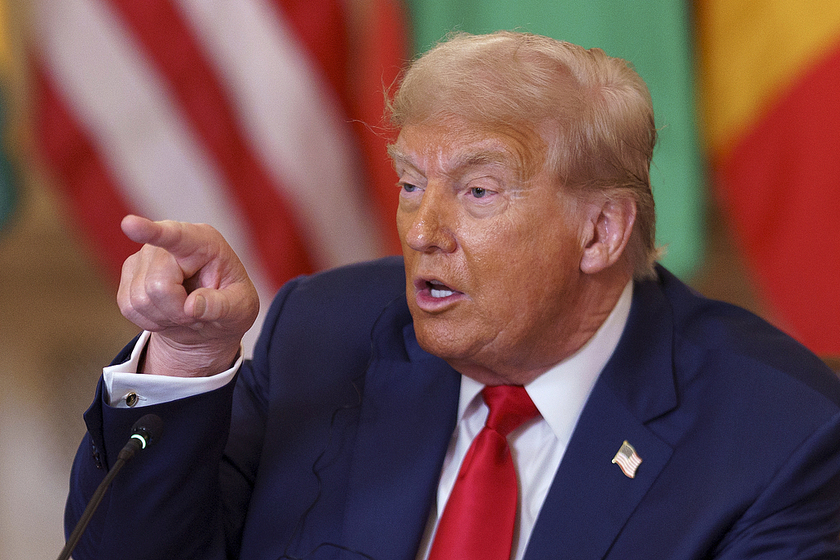
(Poder360) ― The Trump administration is set to impose a blanket 50% tariff on all goods imported from Brazil, a move that threatens to disrupt billions of dollars in trade and hit key sectors of the South American nation’s economy, including oil, steel and aerospace.
The tariff, announced by U.S. President Donald Trump, is slated to take effect on Aug. 1. The decision stands to affect a significant trade relationship. Brazil exported $40.4 billion in goods to the U.S. in 2024, accounting for 12% of its total exports.
Crude oil and its derivatives are at the top of the list of goods sold to the U.S., totaling at least $7.5 billion last year, or 18.3% of all exports to the U.S.
Brazil’s significant aerospace industry, which exported $2.7 billion in aircraft and related equipment to the U.S. in 2024, would also be sharply affected by the new levy.
The measure, which the Trump administration described as unilateral, will be applied automatically to all Brazilian products on top of any existing duties. U.S. officials also initiated a formal investigation into Brazil’s trade practices under Section 301 of the U.S. Trade Act, citing what it deemed unfair policies.
The move drew immediate criticism from economists, who warned of broad negative consequences for Brazil’s economy.
“This is a moment to lower our guard, to call the American government to the table to discuss, as several other countries have done, in order to reverse this scenario,” said Ecio Costa, a professor at the Federal University of Pernambuco, speaking to the news outlet Poder360. “If not, it will sharply decelerate the Brazilian economy, because this has a contagion effect.”
Costa said the tariff would likely trigger a devaluation of the Brazilian real, which in turn could fuel inflation as the cost of imports rises. He also highlighted the specific threat to Brazil’s industrial sector, as the U.S. is a major buyer of manufactured products that support higher-paying jobs.
“The detail that is even more worrying is that we are not big exporters of commodities to the United States, but of industrialized products,” Costa said.
In his announcement, Trump cited a trade deficit with Brazil as justification for the tariff. But that claim was immediately disputed by economists who pointed to official data showing the opposite.
“It’s an absurdity, and he is even more mistaken when he says it’s because of the deficits that the United States carries with Brazil,” said Alex Agostini, chief economist at Austin Rating. “That’s a lie, because since 2009 Brazil has run a trade deficit with the United States.”
Some analysts believe the tariff will be difficult to reverse because of its political underpinnings. In a letter announcing the measure, Trump linked the decision to Brazil’s prosecution of its former president, Jair Bolsonaro.
“The situation now is purely about the prospect of what will happen in the future, because there is a very heavy political component to this story,” said Jason Vieira, chief economist and partner at LAM Asset Management. “That’s what we need to watch, because this could be much more prolonged than with other countries.”
This article, originally published in Portuguese by Ponder 360 on July 10, was translated and republished by Caixin Global under a mutual content-sharing arrangement.
Contact editor Lu Zhenhua (zhenhualu@caixin.com)
caixinglobal.com is the English-language online news portal of Chinese financial and business news media group Caixin. Global Neighbours is authorized to reprint this article.
Image: IHERPHOTO – stock.adobe.com