
Yuan Rallies to One-Year High on Trade Optimism and Fed Cut Bets
By Wang Shiyu

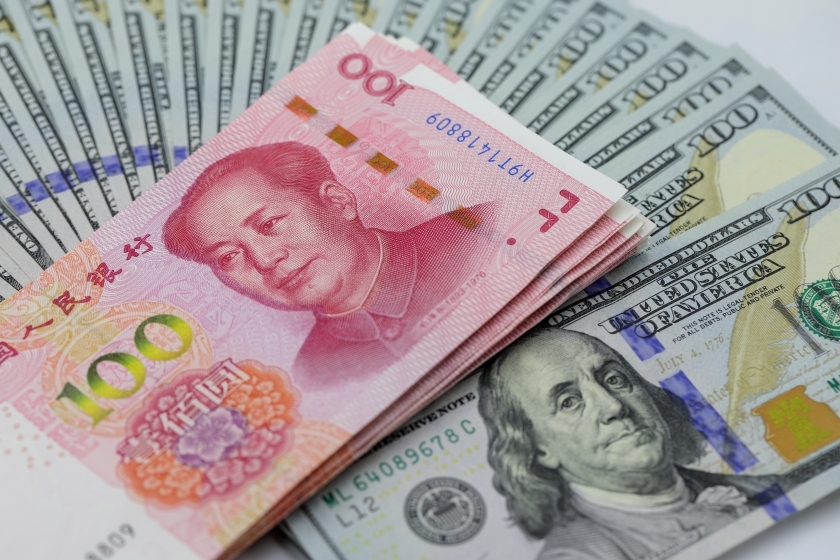
The Chinese yuan has climbed to its highest level in nearly a year against the U.S. dollar, buoyed by softening trade tensions with Washington and growing expectations that the U.S. Federal Reserve will lower interest rates.
On Tuesday, the onshore yuan closed official trading at 7.0938 per dollar, gaining 118 basis points from Monday. It strengthened further overnight, briefly breaking below the 7.085 mark. The offshore yuan mirrored the move, appreciating to around 7.081, a daily rise of 0.3%.
China’s central bank set the yuan’s daily reference rate at 7.0826 per dollar, 21 basis points stronger than the previous day.
The advance marks a notable shift for the currency, signaling to some analysts that the yuan’s multiyear depreciation cycle, which began in 2022, may be drawing to a close. A prolonged period of appreciation could lift the appeal of yuan-denominated assets among global investors and give Beijing greater leeway to introduce exchange-rate reforms.
The gains came as the U.S. dollar weakened, with the dollar index falling 0.28% Tuesday and briefly dipping below the 100 mark. Market sentiment has tilted toward a Fed rate cut in December, with expectations now above 70%, according to Wang Zhiyi, dean of the Cross-border Finance Research Institute.
Signs of easing U.S.-China trade tensions also helped. Presidents Xi Jinping and U.S. President Donald Trump spoke by phone on the evening of Nov. 24, discussing progress on a trade pact and bilateral economic ties, according to White House.
Domestically, improving economic indicators and the conversion of accumulated export revenues into yuan also lifted the currency. “Export settlements and cross-border capital inflows are offering short-term demand-side support,” said Wang, who added that improved capital flows are aligning with broader market trends.
“The stable and appreciating central parity rate is reinforcing expectations of yuan strength,” he said, noting that recent open-market operations, liquidity moves, and regulatory guidance have stabilized sentiment.
Looking ahead, some analysts see the yuan entering a new cycle. The depreciation trend from 2022 to 2024 may have ended, and the yuan could be on track for medium- to long-term gains, said Lu Zhe, chief economist at Soochow Securities.
Lu pointed to resilient export growth, a return of foreign capital to yuan assets, and a structurally weaker dollar as drivers of potential appreciation through late 2025 and into 2026.
If policy is well executed, yuan assets could benefit from the accelerating fragmentation of the global monetary system, said Miao Yanliang, chief strategist at China International Capital Corp. Some of that capital could flow back into Chinese markets, he said.
“The current dollar depreciation cycle is a key window to enhance the yuan’s flexibility,” Miao said. But with China in a low-rate environment, the lack of yield from currency gains could limit foreign appetite. Still, a modest widening of the yuan’s float could deter shorting in carry trades, he added.
caixinglobal.com is the English-language online news portal of Chinese financial and business news media group Caixin. Global Neighbours is authorized to reprint this article.
Image: Eagle – stock.adobe.com