Indonesia Signals Peak in Nickel Mining Investment as Focus Shifts to Batteries, EVs
By Lu Yutong

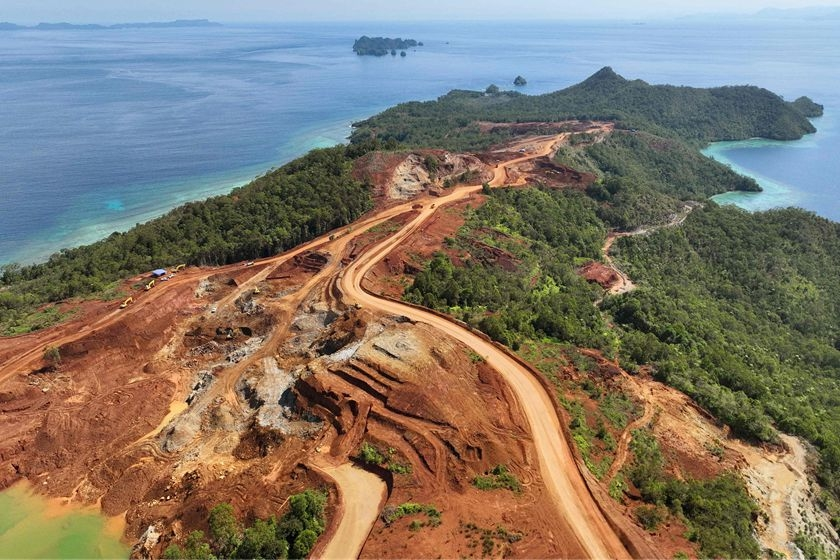
Indonesia’s nickel mining boom has likely crested, shifting the resource-rich nation’s focus toward downstream battery production and electric vehicles (EVs), a senior government official said.
Septian Hario Seto, an economist and a member of Indonesia’s National Economic Council, told the DBS Metals & Mining Indonesia Forum in late November that the rapid pace of capital injection into upstream nickel extraction is settling down. The key task now is capitalizing on the processing capabilities built over the last few years, he said.
The strategic pivot comes as Southeast Asia’s largest economy strives to move beyond raw commodity exports to build a sophisticated manufacturing base, a transition deemed essential to meeting President Prabowo Subianto’s target of 8% annual economic growth.
Seto explained that investment in the nickel sector will not sustain the rapid growth rates seen in the past five years. He cited two primary drivers: Chinese mining companies have already established a massive footprint in the archipelago, and China’s slower domestic economic growth has curtailed its overseas spending. Additionally, domestic capacity has reached a saturation point. With Indonesia now accounting for 65% to 70% of global nickel output, Seto warned that current expansion rates point to a supply surplus of 400,000 to 600,000 tons by 2026.
The archipelago is now racing to develop its midstream and downstream capabilities. Although still trailing China’s capacity of over 2 million tons, Indonesia has surpassed Japan and South Korea to become the world’s second-largest producer of battery anode materials, with a capacity of 160,000 tons, according to Seto. The country also ranks third globally in cathode and precursor materials, with annual capacities hovering around 100,000 tons.
By September 2025, Indonesia had exported $27.2 billion in nickel-related materials and downstream products. Seto noted that the country began exporting battery cells and packs in the second quarter of 2024 and started shipping anode materials in the first quarter of 2025.
Major automakers are ramping up local operations to utilize this supply chain. Seto noted that BYD Co. Ltd. is building a $1.3 billion EV vehicle plant with an annual capacity of 150,000 vehicles, slated for production in 2026. Guangzhou Automobile Group Co. Ltd. (GAC) is expanding its local capacity from 20,000 to 50,000 units, while Vietnam’s VinFast plans a factory of similar size, also expected to open in 2026.
While Japanese combustion-engine cars still dominate the market — led by Toyota Motor Corp., which held 30% of sales in the first 10 months of the year — Chinese brands are capturing the nascent EV sector. BYD topped the EV sales charts in the first 10 months of 2025, with approximately 31,000 units sold.
“If we stay at 5% growth, we will never achieve our goal,” Seto said, referring to the Golden Indonesia 2045 vision of becoming a developed nation by that year. To bridge the gap, Jakarta is also revitalizing labor-intensive industries like textiles and footwear, particularly in Central Java. Seto highlighted an opportunity to grab market share in the U.S., the world’s largest textile importer, where Indonesia currently holds only a 4.9% share.
The government is streamlining regulations to attract these investments. Seto said authorities are designing a “green lane” mechanism to fast-track permits for labor-intensive factories, citing a shoe factory in Central Java that previously faced a three-year wait for environmental permits known as AMDAL. However, he acknowledged that workforce skills remain a bottleneck, noting that productivity in some sectors currently lags behind regional rival Vietnam.
caixinglobal.com is the English-language online news portal of Chinese financial and business news media group Caixin. Global Neighbours is authorized to reprint this article.
Image: mirwanto – stock.adobe.com