
Global Education Summit Shifts Tone on AI, Rewards Human-Centric Tech
By Tang Hanyu and Fan Qiaojia

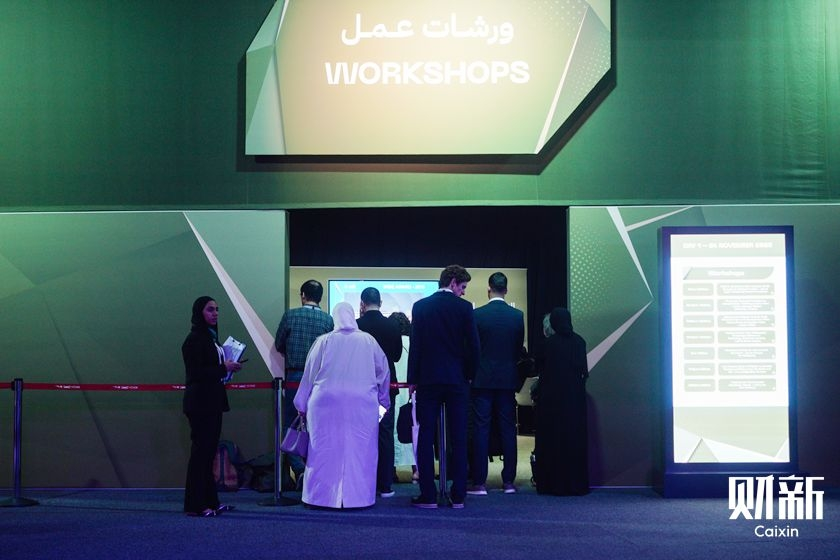
(Doha, Qatar) — A global education summit concluded on Nov. 25 with a marked shift in tone from the technology-fueled enthusiasm of recent years, instead emphasizing human values and awarding its top prize to a non-profit using artificial intelligence to help teens learn creative skills.
The 12th World Innovation Summit for Education, or WISE, adopted the theme “Humanity.io: Human Values at the Heart of Education,” a deliberate effort to bridge technology and human-centric principles. The “.io,” a common abbreviation for input/output in computer science, symbolized the summit’s call for educational innovation to remain focused on people.
“This theme places equity, empathy, and human dignity at the core of how we imagine education in an AI-powered world,” a WISE official statement said.
The summit, launched in 2009 by the Qatar Foundation under the patronage of its chair, Sheikha Moza bint Nasser, is designed to foster global collaboration in education. The highlight of the two-day event was the announcement of the 2024–2025 WISE Prize for Education, an award intended to elevate the status of the field to that of literature or economics.
This year’s top prize of $500,000 was awarded to the TUMO Center for Creative Technologies, a non-profit organization founded in Armenia. The second-place prize of $300,000 went to the Iqrali.jo early childhood development project from Jordan’s Queen Rania Foundation for Education and Development. Darsel, a U.S.-based non-profit educational technology company, won the third-place prize of $200,000 for its math-tutoring chatbot.
The winners were selected from 427 applicants and a finalist pool of six teams, each of which had previously received $125,000 to develop a “minimum viable product” for a persistent educational challenge. Previous WISE Prize laureates include Wendy Kopp, founder and CEO of the network Teach For All, and Safeena Husain, founder of Educate Girls, a non-profit that aids out-of-school girls in rural India.
This year’s criteria specifically sought solutions for improving Arabic language instruction, accelerating foundational literacy, and preparing young people for the AI era.
TUMO, the grand prize winner, focused on the third challenge with its AI-driven personalized learning platform for students aged 12 to 18. The platform, used in physical learning centers, is notable for positioning its AI as a student’s peer rather than a tutor. For instance, when a student masters a concept, the AI “co-learner” will deliberately fail and ask for help. This approach of “using AI to teach AI” was cited as one of its biggest strengths.
“TUMO’s solution treats AI as both a learning objective and a means for students to achieve their goals,” said Aurélio Amaral, WISE Program Director. “This embodies our core mission of supporting innovations that enhance teaching practices from within.”
TUMO, which is free for students in Armenia, covers over 20 skill areas, including computer programming, animation, and robotics. Its financial sustainability relies on an international franchise model, using license and support fees from its centers in countries like France, Germany, and Switzerland to fund its operations in Armenia.
The second-place winner, Iqrali.jo, applies AI to boost Arabic literacy. In Jordan, where only 1% of parents regularly read to their children, the app provides age-appropriate books and guidance for parents. In a pilot program, the app increased the rate of frequent reading among families from 10% to 41%.
Darsel, the third-place winner, developed its math chatbot for messaging platforms like WhatsApp, offering a low-cost, accessible tool for students facing device and data limitations in Jordan, India, and Nigeria. A two-month pilot in under-resourced Jordanian schools showed a significant improvement in students’ math scores.
Other finalists included AprendoLab, a Chilean project for training teachers in AI-assisted instruction; Bonocle, a Qatar-based initiative providing smart tools and a learning app for blind and low-vision children; and FastTrack+, a Nigerian project using a bilingual, offline “talking pen” to improve literacy and numeracy for refugee and out-of-school children.
These projects, most of which are free to users and rely on donations and grants, highlight a growing focus on using technology to serve vulnerable populations. The question of how such non-profits can build sustainable revenue models remains a central challenge for the sector.
caixinglobal.com is the English-language online news portal of Chinese financial and business news media group Caixin. Global Neighbours is authorized to reprint this article.
Image: InfiniteFlow – stock.adobe.com