Cover Story: How China Inc. Is Discovering Its New World in Brazil
By Zhao Xuan from Brazil, Bao Yunhong in Shanghai and Han Wei in Beijing


or Duan, a Portuguese-speaking professional who moved from China to Brazil 12 years ago, the change is palpable. “There are clearly more Chinese people in São Paulo in 2025,” he said. “Chinese restaurants have been opening up one after another. There are at least 10 times as many as when I first arrived”.
The buzz is spreading. “Even people in my home village in Hebei province are asking me if it’s possible to make money here in Brazil.”
For a growing wave of Chinese businesses, the answer is a resounding yes. Brazil, Latin America’s largest economy and a global top-10 powerhouse, represents a new world of opportunities. With a population of more than 200 million people — 40% of whom are under 30 — the BRICS and G20 member offers a vast consumer base, abundant natural resources and regional influence that few emerging markets can match.
More broadly, Latin America itself has grown into a consumer market of considerable scale. Accelerating urbanization and middle-class expansion have helped turn the region’s 650 million citizens into a large and increasingly sophisticated consumer base.
From electric vehicles (EVs) and digital platforms to mining and energy, Chinese companies are no longer simply testing the waters. Brazil is now one of their most important overseas markets — and for some a primary source of international profit.
“Brazil is a key market for us as Didi strategically pivots toward internationalization,” said Wang Simeng, head of Didi Global Inc.’s ride-hailing platform 99 in Brazil. Du Zheng, vice president of short-video platform Kuaishou Technology, added that Brazil is already his company’s largest overseas market.
A number of complimentary economic factors underpin the relationship. Since 2024, China and Brazil have signed a number of agreements deepening investment cooperation in the digital economy and sustainable development. China brings a complete manufacturing system, while Brazil offers natural resources, agriculture and renewable energy.
Chinese interest in the country used to be limited to infrastructure and resource projects but that is changing. Companies are moving into higher value-added industries, a move that aligns with China’s industrial upgrading and Latin America’s development goals, according to Mauricio Pacheco, a partner at Trench Rossi Watanabe, a leading Brazilian law firm strategically partnered with Baker McKenzie.
“This dynamic reflects both China’s development priorities and the growth and diversification opportunities for Latin American countries, consolidating an increasingly strategic and multidimensional partnership,” said Pacheco.
This is a calculated response to a shifting global landscape. Amid changing trade and industrial dynamics, closer cooperation with Chinese companies is a rational choice for Brazil, as businesses seek to diversify, reduce reliance on traditional markets and hedge geopolitical risk, he added.
Brazil also serves as a springboard into the wider Latin American market. Investments there not only serve local demand but are designed to radiate outward across the region, helping Chinese companies accumulate experience and build supply chains for expansion into neighboring countries.
There are complexities, however. Brazil’s tax system, currency volatility and strict labor protection laws pose challenges for foreign investors. Pacheco warned that companies that try to copy strategies from other markets or underestimate compliance needs often face setbacks.
Donald Trump’s re-election and high U.S. tariffs on Brazilian imports have paradoxically drawn China and Brazil closer, according to many Chinese executives interviewed by Caixin. As Chinese companies dig in, they are finding a market that is as rewarding as it is unforgiving — and increasingly impossible to ignore.
Charging ahead in EVs
At the São Paulo International Motor Show in late November, Chinese automakers dominated the spotlight. More than a dozen brands — including BYD, Great Wall Motor, Geely and Chery — were present, prompting local industry veterans to dub the event a “Chinese international auto show.”
The EV sector is leading this Chinese charge into Brazil. EV penetration in Brazil is still around 8% but is approaching a tipping point and Chinese carmakers are racing to grasp an early advantage. “The coming year may see the opening year of the great EV war in Brazil,” one industry insider told Caixin.
The stakes are high. Brazil is the world’s sixth largest car market, and Chinese brands are already making rapid gains. In the first nine months of 2025, sales at BYD, Chery and Great Wall rose 55%, 11.1% and 31.3%, respectively. This year, Chinese automakers have captured more than 10% of Brazil’s passenger vehicle market and an estimated 70% of its EV segment.
This momentum is rooted in a decade of favorable policy. Beginning in 2015, Brazil waived import duties on battery EVs and offered tax breaks for hybrids. But as EV technology matured and costs fell, Brazil’s priorities have moved from imports to domestic investment.
That change became explicit in 2024. Starting in January, Brazil began gradually raising tariffs on imported new energy vehicles. By July 2026, those tariffs will reach 35% — matching those on gasoline-powered cars — as the government seeks to encourage local production.

The change has seen Chinese carmakers move from pure sales to localized manufacturing. This summer, both BYD and Great Wall opened their first passenger car plants in Brazil. GAC Group, which entered the market in May and plans to establish 50 dealerships this year, also has plans for a factory in the state of Goiás.
Tyler Li, CEO of BYD Brazil, said the direction was apparent even when he first visited the country in 2013. “It was already clear that a business model based solely on imports would not be sustainable,” he said.
Chinese companies are pursuing different strategies. Geely, for example, said just before the São Paulo show that it was forming a joint venture with Renault Group, tapping Renault’s existing factories and dealer network to reduce upfront investment and operational risk. BYD, by contrast, favors full ownership of overseas plants. Chairman Wang Chuanfu has argued that speed is critical in global expansion, and wholly owned factories offer greater efficiency and control.
The influx of Chinese carmakers is intensifying competition. Brazil’s auto market is increasingly divided into two camps: long-established players such as Volkswagen and Ford, with decades-old operations, deep supplier networks and strong political influence; and newer entrants led by Chinese brands adopting advanced EV technology and aggressive pricing to gain share.
Technology alone will not decide the outcome, however. “What will ultimately determine success is localization ability,” Li said, citing the need to adapt vehicle design, build local supply chains and navigate Brazil’s complex legal and tax systems.
The tax environment, in particular, poses challenges. “There are hundreds of different tax scenarios,” Li said. Unlike China’s centralized system, Brazil’s federal, state and municipal tax layers create a maze of rules that require large compliance teams. “As a result, Brazil has some of the largest tax and legal teams among Chinese companies operating overseas,” he added.
The digital gold rush
Brazil is also becoming a new battleground for China’s internet giants, as they push into a digital market long dominated by U.S. firms such as Google and Meta.
Chinese apps are gaining traction across sectors from e-commerce and social media to ride-hailing and food delivery. ByteDance’s short video platform TikTok now ranks as Brazil’s ninth most-used app. Alibaba Group, Pinduoduo’s Temu, Shein, Kuaishou and Didi are all expanding aggressively in the country.
The attraction is obvious. Brazil has 183 million internet users and consumers known for embracing new brands. It also anchors Latin America, the world’s fastest-growing e-commerce region.
According to eMarketer, Latin America’s e-commerce sales are projected to grow 12.2% in 2025 — about 1.5 times the global average. Brazil alone accounts for a $78 billion online retail market, the region’s largest. Competition from platforms such Shopee, backed by Tencent Holdings, Shein, Temu and TikTok Shop is expected to keep growth in double digits through 2027, with online sales forecast to reach $113.9 billion by 2029.

Services remain the backbone of Brazil’s economy, accounting for 68.9% of GDP in 2024, offering a fertile ground for Chinese tech and service platforms, according to the Brazilian Institute of Geography and Statistics. The country’s e-commerce penetration is projected to reach 13% this year, up from 4.97% in 2019, but still well below levels in China and the United States. “Brazil’s e-commerce market still has significant room to grow,” said Thomaz Gelis Fittipaldi, head of China operations at Mercado Libre, Latin America’s largest e-commerce platform.
“Brazil’s vibrant consumer demand complements China’s powerful supply chain,” said Lidia Wu, who oversees China cross-border operations at Mercado Libre. The company has seen the number of Chinese sellers on its platform grow at a triple-digit pace in recent years.
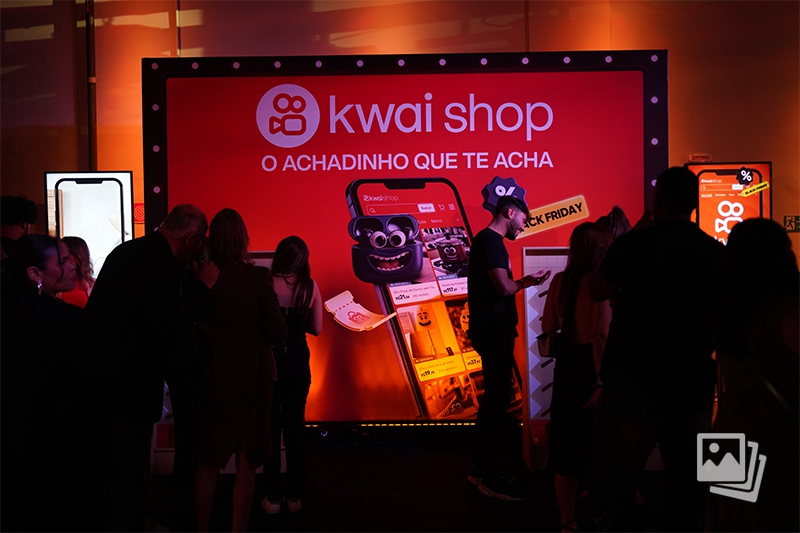
Kwai, the international version of China’s short-video app Kuaishou, has operated in Brazil for eight years and now counts the country as its largest overseas market. “For content platforms, a large population means scale,” said vice president Du. “And Brazilians are very receptive to foreign products.” In late 2024, Kwai entered Brazil’s cross-border e-commerce market.
The surge in online retail has drawn in Chinese logistics providers. Cainiao, J&T Express and iMile have expanded operations in Brazil to support rising delivery demand.
Competition is also intense in on-demand services. In food delivery, Didi’s 99Food is facing off against Meituan’s Keeta. Didi, which acquired Brazilian ride-hailing leader 99 in 2018, has successfully challenged Uber, with market share now comparable to its U.S. rival. “Ride-hailing penetration here is even higher than in China,” said Wang Simeng, head of 99.
Success, executives say, depends on more than the export of China’s business models. Wang said Didi learned that lesson after a carpooling feature failed to take off in Brazil because users expected more social interaction. “You have to understand local needs deeply,” he said.
That has required empowering local teams. “Brazilian employees expect to participate in decision-making,” Wang said. “We invest heavily in communication through all-hands meetings.”
Regulation poses a further hurdle. Daniel Facó, a partner at law firm Trench Rossi Watanabe, said Brazil is expected to introduce tighter rules on data protection and cybersecurity in the coming years, including stricter controls on sensitive data and cross-border data flows.
Chinese companies, he said, should closely track legal reforms and work with local teams to adapt to regulatory change.
Mining for the future
Brazil has become a linchpin in the global push to secure minerals and power supplies for the green-energy transition — and Chinese companies are among the most active foreign players.
China’s presence in Brazil’s mining sector dates back more than a decade. In 2011, CITIC Metal Co. Ltd., a unit of state-owned conglomerate CITIC Group, led a consortium that bought a 15% stake in the Brazilian mining company CBMM, the world’s largest producer of niobium, a metal critical for high-strength steel and batteries.
More recently, China’s state-backed miner MMG Ltd. agreed in February to buy Brazil Nickel Corp. from Anglo American Plc for up to $500 million, marking MMG’s entry into Brazil. The deal is under review by European Union antitrust regulators amid fears it would divert ferronickel supply from Europe raising costs for its stainless-steel industries.
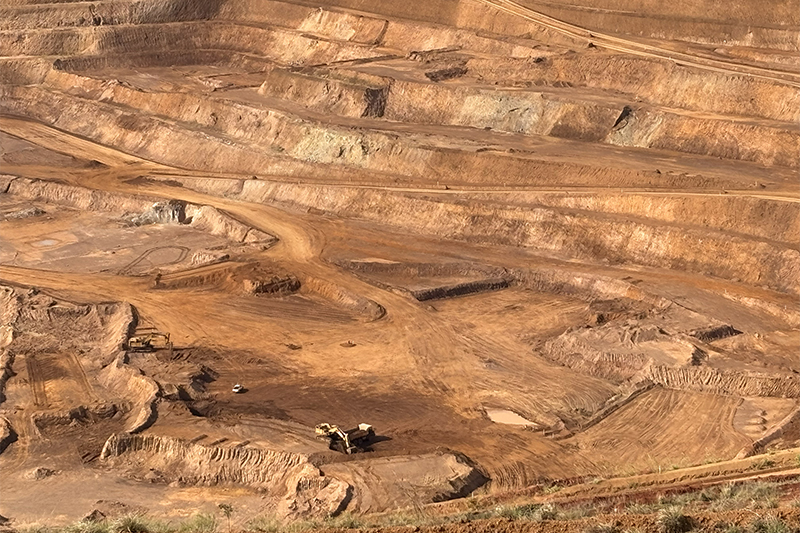
“Brazil has a relatively mature and friendly investment environment for mining in South America, and we see this as an entry point,” an MMG executive said.
In December, CMOC Group Ltd. agreed to acquire four operating gold mines from Canada’s Equinox Gold Corp. for $1.015 billion, with closing expected in the first quarter of 2026. The private mining group has built a large South American footprint anchored by its niobium-phosphate mine in Catalão, in Goiás state.
Operating in Brazil has also served as a proving ground. Environmental licensing is among the world’s most stringent, with approvals for routine expansions — such as tailings dams used to store waste slurry — often taking five to eight years and requiring extensive community consultation. “You have to operate with the precision of an embroiderer,” said Du Zhijie, executive director of CMOC Brazil.
Brazil’s mineral wealth is matched by vast clean-energy potential. Nearly 90% of its electricity comes from renewable sources, mainly hydro, wind and solar. Chinese companies are embedded across Brazil’s power sector, from transmission operator State Grid Corp. of China to generators such as China General Nuclear Power Group, China Three Gorges Corp. and State Power Investment Corp., as well as equipment makers including Sany Renewable Energy Co. Ltd., Goldwind Science & Technology Co. Ltd. and Longi Green Energy Technology Co. Ltd.
“From a resource standpoint, Brazil is one of the best wind markets in the world, particularly the northeast,” said Guan Feng, Latin America head of Sany Renewable.
Yet the country’s power infrastructure has become a bottleneck. Transmission constraints are increasingly limiting new renewable projects, despite strong underlying demand.
Wind capacity expanded rapidly earlier this decade, with 2.3 gigawatts added in 2020 and installations reaching 4.9 gigawatts in 2023. But growth slowed in 2024, when new additions fell to 3.3 gigawatts, and few new projects have been tendered for 2025.
Guan attributes the slowdown to transmission shortages. The government has acknowledged the problem and plans new backbone transmission lines, with key projects scheduled to come online between 2028 and 2029. Among them is an ultra-high-voltage line in the northeast being built by the Brazilian subsidiary of China’s State Grid, set to become the country’s largest transmission concession.
Higher borrowing costs are another headwind. In June 2025, Brazil’s central bank raised its benchmark interest rate to 15%, pushing up financing costs for capital-intensive renewable projects.
Even so, executives remain bullish over the longer term. Chinese EV makers are expanding local manufacturing, increasing demand for reliable clean power, while data centers are proliferating. In December, TikTok announced plans to invest 200 billion reais, about $37 billion, in a massive data-center complex in northeastern Brazil, the largest such project in the country.
For now, Chinese clean-energy companies are moving deliberately. “Latin America isn’t a short-term boom market,” Guan said. “It requires patience, local know-how and the ability to navigate complex regulation.”
Adapting to stay
Beyond strategic plans and billion-dollar investments, operating in Brazil requires deep immersion in a society governed by entrenched rules, from labor protections to workplace norms, executives said.
Macroeconomic and political risks compound the challenge. Exchange-rate volatility and policy uncertainty are a persistent concern across Latin America, said Mauricio, with Brazil’s real among the region’s most volatile currencies. Sudden policy shifts can quickly reshape market conditions and investment returns. To manage those risks, he urged companies to rely more heavily on trade-settlement mechanisms, local banking tools and structured financing to hedge currency exposure.
Political cycles add another variable. Brazil is scheduled to hold a presidential election in 2026, a change Chinese companies must factor into long-term planning. While elections can bring short-term uncertainty, Mauricio said Brazil’s institutional framework remains relatively stable, providing continuity despite changes in government.
At the operational level, Brazil’s powerful unions and stringent labor laws present a steep learning curve. Regulations tightly govern working hours, leave, dismissal procedures and workplace equality. Once mandatory benefits are included, the cost of hiring can be twice an employee’s basic salary.
“The most common lawsuits companies face are labor disputes, workplace bullying and sexual harassment,” said an administrative manager at a Chinese firm in São Paulo. Employees have broad and low-cost access to legal remedies, making even minor management slip ups a potential legal risk.
Such conditions leave little room for a “fly-in” management model that Chinese companies have used elsewhere. With local employees accounting for more than 99% of the workforce at many firms, adaptation is unavoidable.
“In overseas markets, neither a purely Chinese mindset nor a direct copy of Western practices really works,” said CMOC’s Du Zhijie. Sustainable management, he said, must rest on shared values that transcend national and cultural boundaries.
Lu Yutong, Guan Cong, Qing Min, Luo Guoping and Yu Cong contributed to the story
Contact reporter Han Wei (weihan@caixin.com)
caixinglobal.com is the English-language online news portal of Chinese financial and business news media group Caixin. Global Neighbours is authorized to reprint this article.
Image: Amin Rajput – stock.adobe.com