
China’s Autonomous Driving Firms Step Up Global Push With Uber Deals
By Yu Cong, Wang Xintong and Kelsey Cheng

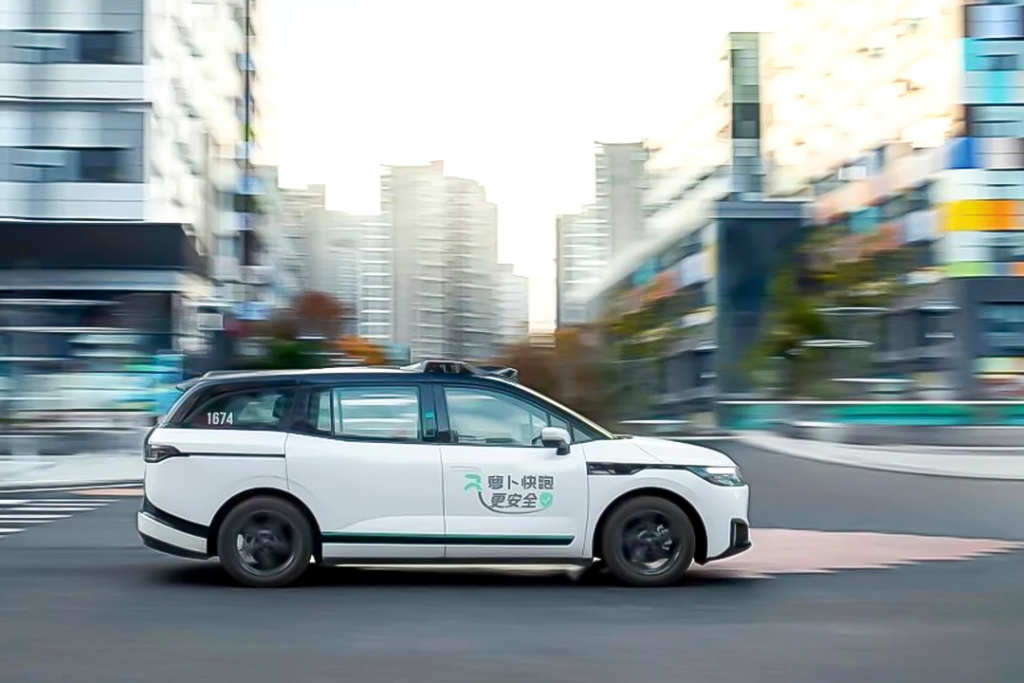
China’s autonomous vehicle companies are ramping up global expansion amid mounting commercial hurdles at home.
Among the latest deals is Baidu Inc. teaming up with Uber Technologies Inc. to roll out the Chinese tech giant’s Apollo Go robotaxis in Asia and the Middle East later this year, the companies announced on Tuesday.
The deployment is part of a “multi-year strategic partnership to deploy thousands of Baidu’s Apollo Go autonomous vehicles (AVs) on the Uber platform across multiple global markets outside of the U.S. and mainland China,” the companies said in a press release.
The partnership marks Baidu’s entry on a growing list of Chinese self-driving startups joining forces with Uber, including WeRide Inc., Momenta and Pony.ai Inc. For Uber, the move continues its strategy of partnering with external developers of autonomous driving systems after abandoning its own costly self-driving unit, Advanced Technologies Group, in 2020.
WeRide was the first Chinese autonomous driving firm to launch robotaxi services on Uber’s platform, with operations already underway in Abu Dhabi and Dubai. In May, the pair announced plans to expand the service to 15 more cities over the next five years.
Pony.ai’s robotaxi fleet is slated to join Uber’s platform in the second half of 2025, debuting first in the Middle East. Momenta’s autonomous vehicles will begin operating under Uber’s banner in Europe starting early 2026.
For the Chinese companies, such partnerships offer a fast track into international markets. Uber provides a platform that helps autonomous driving companies expand abroad, a Pony.ai employee told Caixin.
The partnerships come as Chinese robotaxi operators push for overseas growth, capitalizing on cost advantages and driver shortages. “Compared to the traditional taxi and ride-hailing services, robotaxi is expected to be 50% or more cost-effective in developed markets,” WeRide’s Jennifer Li said on May 21. Furthermore, many markets are grappling with severe driver shortages and problems with hiring and retention, creating a fertile ground for robotaxi adoption, she said.
The Middle East has emerged as a popular destination. In March, Baidu’s Apollo Go signed an agreement with Dubai’s Roads and Transport Authority (RTA) to deploy over 1,000 fully driverless vehicles in the city. Pony.ai signed a similar deal with the RTA this month. The authority aims for 25% of all trips in Dubai to be autonomous by 2030.
In 2023, WeRide secured the United Arab Emirates’ first national-level autonomous driving license. The company launched services in Abu Dhabi in late 2024, and is working with Uber and the RTA to deploy robotaxis in Dubai.
But there are caveats with these moves abroad. While the announcements tout large fleet deployments, an industry insider said that the actual number of robotaxis rolled out overseas via Uber remains limited. Short-term profitability and scale remain out of reach as of yet, he said.
Back home, despite policy support, their expansion also faces challenges. In June last year, Apollo Go launched near citywide autonomous ride-hailing in Wuhan, Central China’s Hubei province, but rising domestic scrutiny over the impact on traditional taxi and ride-hailing jobs has dampened enthusiasm for high-profile rollouts.
Employees from two Chinese autonomous driving firms told Caixin that while their main operations remain in China, it’s still not appropriate to do much promotion at this stage, so they’re shifting their promotional efforts overseas.
Contact reporters Wang Xintong (xintongwang@caixin.com) and Kelsey Cheng (kelseycheng@caixin.com) and editor Michael Bellart (michaelbellart@caixin.com)
caixinglobal.com is the English-language online news portal of Chinese financial and business news media group Caixin. Global Neighbours is authorized to reprint this article.
Image: Cozyta – stock.adobe.com